FoodPackLab Editorial Team
How Malaysian F&B Buyers Can Validate Local Packaging Recovery Pathways
A recycling symbol can be technically correct and operationally useless. For Malaysian F&B owners, procurement buyers and sustainability teams, packaging recovery pathways are credible only when the complete used pack is accepted at every required stage in the area where disposal actually happens.
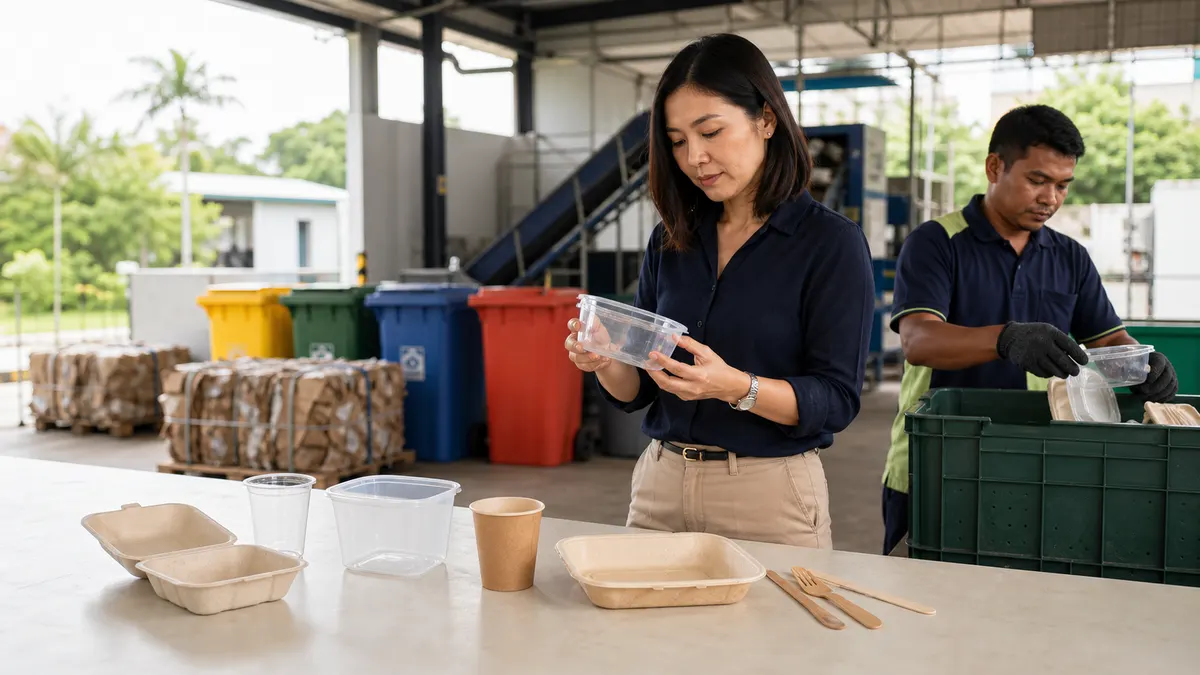
A recycling symbol can be technically correct and operationally useless. For Malaysian F&B owners, procurement buyers and sustainability teams, packaging recovery pathways are credible only when the complete used pack is accepted at every required stage in the area where disposal actually happens.
In this guide: Learn how to validate local packaging recovery pathways in Malaysia for recyclable, compostable and reusable F&B packs, including operator checks, evidence requirements, scorecards and pilot metrics.
Key takeaway: Trace the pack from collection or return through sorting, aggregation, commercial processing or cleaning, and verified end use. If you cannot name and evidence one essential stage, treat the route as unverified.
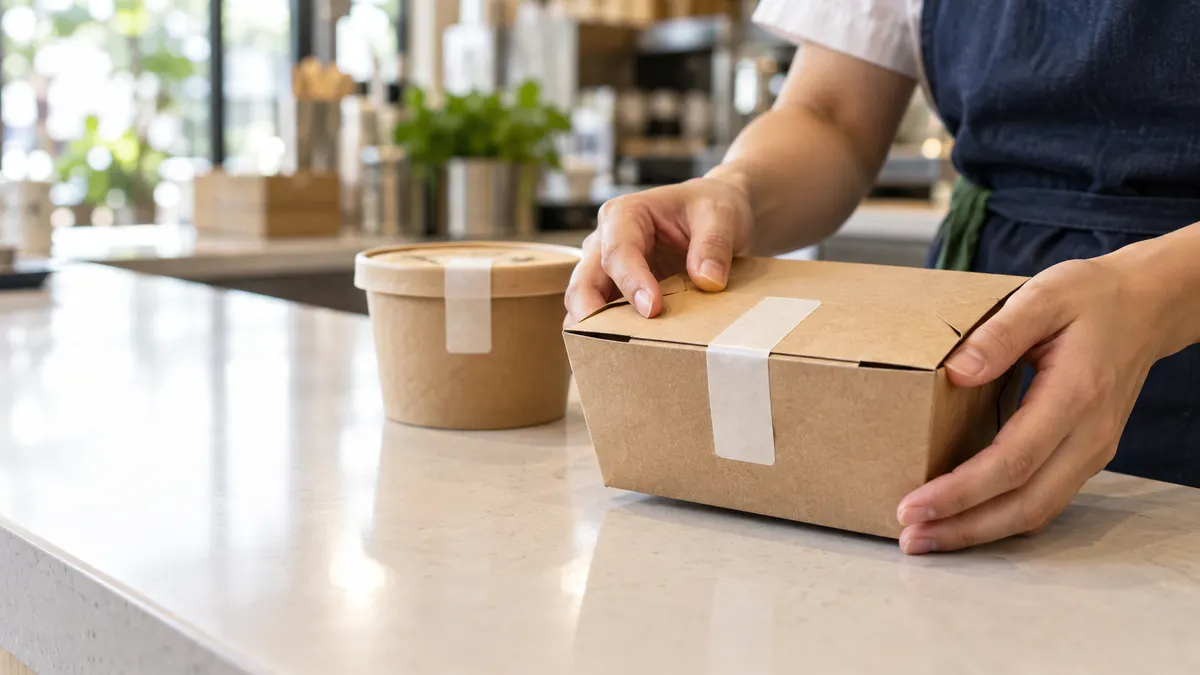
A credible recovery claim connects the actual used pack to a functioning local system.
Validate The Route, Not The Material Claim
“Recyclable”, “compostable” and “reusable” describe possible outcomes under particular conditions. They do not prove that those conditions exist around a cafe, restaurant, cloud kitchen, catering venue or delivery customer.
The minimum proof chain is:
- Collection, drop-off or return
- Sorting and retention
- Aggregation into a usable stream
- Commercial processing, composting or cleaning
- A verified secondary material, compost output or further reuse cycle
A recovery claim is only as strong as the first missing operator in the chain.
Validation must be location-specific. A route confirmed for an outlet in Johor Bahru should not automatically be applied to another outlet in Penang, Kuala Lumpur or a temporary event venue.
Start With A Pathway Claim That Can Be Checked
Broad claims create vague answers. Before contacting a collector or facility, define exactly what you want the local system to recover.
Record the complete packaging format:
- Container material, resin or grade where known
- Colour, dimensions, weight and shape
- Barrier coating, liner or multilayer construction
- Lid, film, seal, closure and sleeve
- Label and adhesive
- Attached sachet, straw or cutlery
- Likely food or drink residue after normal use
Then state the intended route: material recycling, industrial composting, refill, return and reuse, or another documented process. Specify who controls disposal, the operating location and the expected weekly or monthly volume.
A useful claim looks like this: “This complete polypropylene takeaway container and lid are collected from Outlet A, retained by Sorter B and commercially processed by Recycler C.”
A packaging recyclability assessment should examine the complete pack in its intended market. Assessing only the main material can hide problems caused by colour, size, coatings, labels, closures or contamination.
Map Malaysia Packaging Regulations By Location
Malaysia does not operate under one uniform waste-service arrangement. Act 672 applies across Peninsular Malaysia and the Federal Territories except Labuan, Penang, Perak, Selangor, Terengganu and Kelantan.
Being outside an Act 672 area does not mean that waste is unregulated. It means the buyer must identify the relevant state or local authority and service arrangement instead of relying on a single national assumption.
For every outlet, delivery zone or event location, record:
- The responsible local authority
- The concessionaire or municipal service, if applicable
- Any commercial collector used by the business
- The receiving sorting, aggregation or transfer facility
- The downstream recycler, composter or reuse operator
In areas governed by Act 672, parties providing solid-waste services or operating relevant facilities must be appropriately licensed. Request the collector’s and facility’s licence details and verify them with the responsible authority rather than relying on a sales statement.
Separation-at-source arrangements cover Johor, Melaka, Negeri Sembilan, Pahang, Perlis, Kedah and the Federal Territories. This seven-state-and-territory pattern is a practical warning against treating one state’s collection arrangement as nationwide proof.
Record a “checked on” date beside operational coverage, licence status and material acceptance. These details can change, so an undated screenshot or email should not be treated as permanent evidence.
Trace The Complete Packaging Recovery Chain
The packaging recovery chain must work without an unsupported gap. Collection is the beginning of the test, not the conclusion.
Stage 1: Collection Or Return
Confirm whether the exact format is collected at the outlet, through a kerbside arrangement, by a private service or at a named drop-off point. Check opening hours, service frequency, preparation rules and volume limits.
Stage 2: Sorting And Retention
Ask whether the receiving facility identifies and retains the format. Small items, dark colours, flat films, multilayer structures and food-contaminated packs may be collected but removed during sorting.
Stage 3: Aggregation
Confirm whether enough compatible material is accumulated for onward sale or transfer. A collector may accept an item in principle but dispose of it when volume or market demand is too low.
Stage 4: Commercial Processing
Name the recycler, industrial composter, washer or other operator that receives the sorted stream. Obtain confirmation that the facility accepts the complete format under routine commercial conditions.
Stage 5: Usable Output
Ask what comes out of the process. Depending on the route, this might be recycled resin used in new products, screened compost or a cleaned package placed back into circulation.
Packaging collection and sorting are necessary, but neither independently proves recovery. A published recycling drop-off location can establish that customers have somewhere to deliver separated materials. It does not establish that every deposited format survives sorting or reaches a commercial processor.
For plastics, practical recyclability requires compatibility with collection, sorting and commercial recycling in the relevant geographic area. Malaysia’s plastics roadmap similarly treats proper collection, sorting, treatment and processing into recycled resin as connected steps.
Check The Whole Pack Under Realistic F&B Conditions
A clean sample shown in a meeting is rarely representative of a used takeaway pack. Validate the condition that operators will actually receive during lunch service, delivery and closing-time waste handling.
Build an inventory covering the container, lid, film, seal, label, adhesive, sleeve, sachet, attached cutlery and every barrier coating. Ask whether components must be separated and whether staff or customers can reasonably complete that step.
Do not ask only whether “plastic”, “paper” or “compostable packaging” is accepted. Confirm the accepted material or resin, colour, size, weight and construction.
Where relevant, test realistic residues such as:
- Curry, sambal and cooking oil
- Soup, gravy and milk-based drinks
- Ice and remaining drink contents
- Bakery crumbs, icing and grease
- Condensation inside lids and films
Compare the operator’s preparation rules with normal outlet behaviour. Emptying, scraping, rinsing, drying, flattening and removing labels or lids all require time, space and staff compliance.
Mixed materials and contaminants can reduce recyclability. The nominal base material is therefore insufficient evidence of acceptance.
Run A Small Used-pack Check
- Prepare representative packs after normal customer use.
- Photograph the complete pack and its residue level.
- Record whether components were separated, rinsed or left attached.
- Send the description and photographs to the collector, sorter and processor.
- Ask each party to confirm acceptance and preparation conditions in writing.
This field check often exposes the difference between a technically possible route and a workable outlet procedure.
Local Packaging Recycling Validation
Use the following sequence for a recycling claim:
- Obtain written acceptance from the collector.
- Identify the receiving sorting or aggregation facility.
- Obtain written confirmation that the exact used format is retained after sorting.
- Identify the commercial recycler receiving the sorted output.
- Confirm the processing method and resulting material market.
- Where commercially available, inspect recent redacted weight tickets, delivery records or processor receipts.
Ask whether acceptance is routine, conditional, trial-only or dependent on minimum volume, bale quality, market demand and contamination rates.
National policy focuses on polypropylene, PET, HDPE and LDPE/LLDPE. Inclusion in that policy context does not prove that a particular tray, cup, film or takeaway container is processed in a specific service area.
Technical recyclability and operational recycling are different tests. A package may be capable of recycling in suitable equipment but have no functioning collection, sorting or commercial processing route near the outlet.
A supplier questionnaire or online self-assessment can help screen a design. It should not be treated as proof of local processing or independent certification.
ISO 18604:2013 provides requirements and assessment procedures for packaging recoverable through material recycling, but using the standard does not automatically establish conformity. Request a format-specific assessment and evidence for the actual local route.
Validate Compostable Packaging Acceptance Separately
The practical test for compostable packaging acceptance is simple: identify the exact receiving facility and obtain its current written criteria.
Confirm whether the destination is an industrial composting facility, another controlled organic-recycling process or a household compost setting. These routes are not interchangeable.
ISO 17088:2021 addresses plastics suitable for well-managed industrial composting conditions. It does not establish suitability for small household compost systems or justify disposal as litter.
Check both sides of the route. The food-waste collector must accept packaging, and the receiving facility must permit every component of the pack.
ISO 18606:2013 treats packaging as recoverable through organic recycling only when every component meets the relevant requirements, unless non-compliant components can be easily separated before disposal.
For example, a certified bowl does not establish a composting pathway when the lid, label or attached sauce sachet is rejected. Ask about permitted certification schemes, required labelling, contamination controls, processing time and screening losses.
Certification can support a product-level claim within its scope. Without compatible local collection and processing, it does not prove actual recovery.
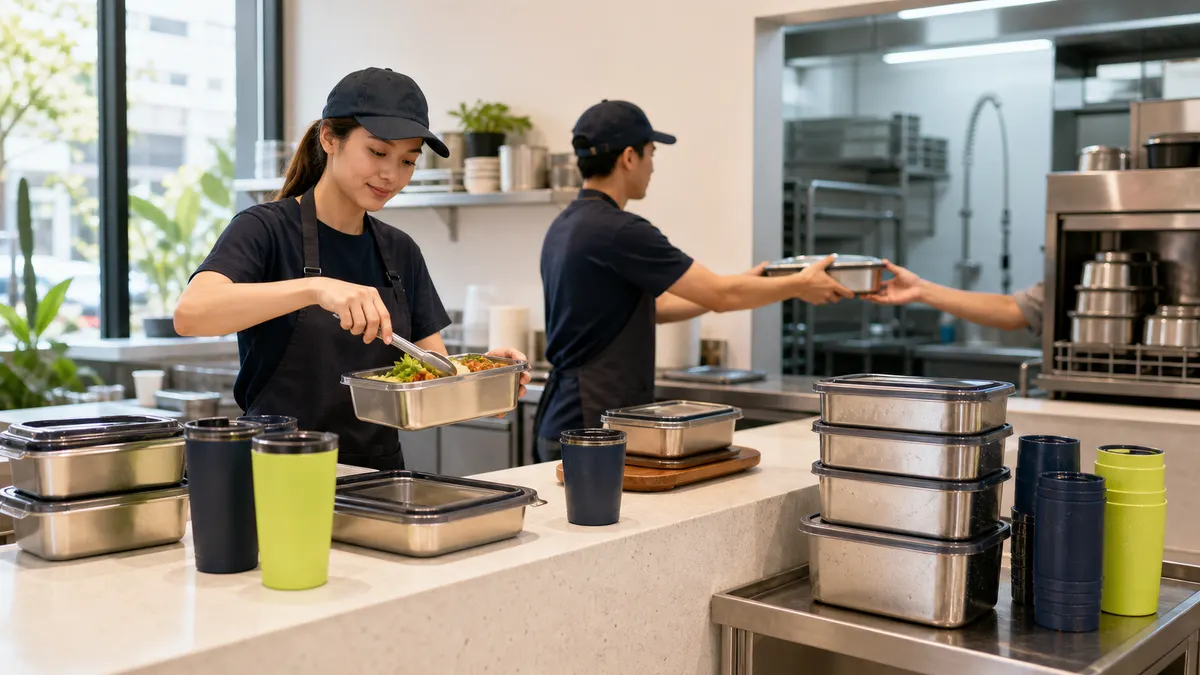
Validate The Reusable Packaging System, Not Just The Container
A reusable packaging system is a package plus an operating loop. A durable container sitting in a customer’s cupboard is not, by itself, evidence of reuse.
Identify the model clearly:
- Refill at home
- Refill on the go
- Return at home
- Return on the go
Map issuance, customer return, collection, loss handling, inspection, washing, drying, storage, redistribution and retirement. Name who operates each stage and where it occurs.
Check return convenience, deposit or incentive rules, turnaround time, breakage, missing lids and the expected trip count. Measure actual returns and successful reuse cycles instead of counting every issued container as reused.
ISO 18603:2013 assesses reusable packaging together with its associated reuse system. This reflects the operational reality: durability matters, but so do return, cleaning and redistribution.
Document cleaning and food-safety controls suitable for the intended use. Any public legal, food-contact, hygiene or safety statement should receive qualified human approval before publication.
Build A Packaging Recovery Evidence Ladder
Not all evidence deserves the same weight. Rank packaging recovery evidence from strongest to weakest:
- Current facility acceptance specifications naming the exact format
- Current licences or official operator records where applicable
- Contracts, collection schedules and named downstream destinations
- Recent weight tickets, delivery records or processor receipts
- Format-specific independent assessments or certifications with valid scope and expiry
- Supplier technical documents and questionnaires
- Generic website statements, resin symbols and verbal assurances
Packaging claims verification requires two separate checks. First, confirm the product or certification scope. Second, confirm operational availability in the disposal area.
An official green-product directory may help confirm whether a listed status is current and when it expires. It does not prove that the package is collected or processed around a particular outlet.
Certification, legal, compliance, food-contact and safety claims require qualified human review before publication. An expired certificate, a certificate for another product code or an assessment limited to one component should not be extended to the complete pack.
Use A Buyer Scorecard And A Firm Decision Rule
Keep one scorecard for each complete packaging format and operating location. Do not merge several outlets into a single “Malaysia” row.
| Check | Evidence requested | Confirmed party | Geographic scope | Conditions | Effective date | Status | Follow-up date |
|---|---|---|---|---|---|---|---|
| Authority and service arrangement | Official coverage or service record | Authority | Outlet or service area | Applicable regime | Record date | Verified, conditional or unverified | Set review date |
| Collector | Written format acceptance and schedule | Collector | Collection address | Preparation and volume | Record date | Set status | Set review date |
| Sorting facility | Written confirmation that the used format is retained | Sorter or aggregator | Receiving facility | Size, colour and contamination limits | Record date | Set status | Set review date |
| Processor | Acceptance specification and process description | Recycler, composter or reuse operator | Named facility | Minimum volume and material quality | Record date | Set status | Set review date |
| Final output | Output description, receipt or transaction record | Processor or buyer of output | Named market or use | Quality specification | Record date | Set status | Set review date |
| Complete-pack acceptance | Component inventory and written acceptance | Collector, sorter and processor | Full route | Lids, labels, liners and closures | Record date | Set status | Set review date |
| Residue and contamination | Preparation and rejection criteria | Sorter and processor | Named route | Residue and contamination limit | Record date | Set status | Set review date |
| Frequency and minimum volume | Schedule, threshold and storage requirement | Collector or processor | Outlet | Minimum quantity | Record date | Set status | Set review date |
| Licence | Licence number and validity | Operator and authority | Applicable jurisdiction | Relevant activity and facility | Expiry date | Set status | Before expiry |
| Certification scope | Certificate, product code and scope | Certificate holder or assessor | Defined market and product | Complete pack or named component | Expiry date | Set status | Before expiry |
| Fallback route | Written procedure for rejected material | Outlet and collector | Outlet | Rejection, disruption or excess volume | Record date | Set status | Set review date |
Apply Three Status Levels
- Verified: Every required stage is named, current and supported by evidence.
- Conditional: The route works only under manageable conditions such as separation, cleaning, minimum volume or scheduled return.
- Unverified: A required stage, facility, acceptance condition or document is missing.
Stop rule: Do not make an unqualified recovery claim when any essential stage is unverified.
When comparing packaging, include staff effort, storage, transport, rejected loads and fallback disposal in the operational cost. A low unit price can be misleading when the claimed route requires substantial handling or produces frequent rejection.
Pilot Packaging Recovery Pathways Before A Wider Rollout
Start with one high-volume format at a representative Malaysian outlet. Choose a location with normal menu residues, takeaway volume and disposal behaviour rather than an unusually controlled site.
- Train staff on the minimum separation or return procedure.
- Run the pilot during normal takeaway, delivery and peak-period conditions.
- Record packs issued, recovered, rejected, contaminated, lost and successfully processed or reused.
- Obtain written feedback from the collector and downstream facility.
- Compare the verified result with the original claim.
- Revise the packaging specification and operating procedure.
A practical pilot metric is the successful recovery rate: the number of packs confirmed as processed or reused divided by the number issued. Keep collection rate and successful recovery rate separate because collected packs may still be rejected downstream.
Repeat validation after changing the container, lid, label, adhesive, coating, menu residue, outlet area, collector or processor. Also repeat it when a licence, contract, certificate or facility acceptance specification expires.
For multi-state operations, maintain a location-by-location matrix. If the business later expands into Southeast Asian markets, repeat the regulatory and operator checks rather than transferring Malaysian conclusions.
Buyer Checklist
- Have we defined the exact complete packaging format?
- Who controls disposal after use?
- Which authority and waste-service arrangement apply at this location?
- Is the collector appropriately authorised or licensed where required?
- Does the sorter retain this exact used format?
- Which commercial processor receives it?
- What usable output results?
- Are residues, labels, liners, lids and closures accepted?
- Are certification scope and expiry current?
- Is every material claim supported by dated evidence?
For more buyer-focused packaging checks, browse the FoodPackLab guides and compare the conditions described in the bagasse food packaging guide. If a location-specific checklist would help your procurement review, use the contact page for a neutral enquiry.
Frequently Asked Questions
Does A Recycling Symbol Prove That My Local Collector Accepts The Pack?
No. A symbol may identify a material or indicate technical potential, but it does not prove local collection, retention during sorting or commercial processing. Confirm the complete format with each operator.
Is A Listed Recycling Drop-off Point Enough Evidence Of Recycling?
No. It establishes a collection option. You still need to identify the receiving sorter, confirm that the format is retained and name the commercial processor.
Can Industrially Compostable Packaging Go Into Home Compost?
Do not assume so. Industrial composting and small household composting operate under different conditions. Follow the product’s valid scope and obtain confirmation from the intended facility or system.
How Often Should An Outlet Revalidate Its Recovery Route?
Set a regular review date and revalidate sooner when the packaging format, menu residue, outlet area, operator, contract, licence, acceptance rule or certification changes. Evidence should also be reviewed before its stated expiry.
What Should A Multi-state F&B Operator Record For Each Outlet?
Record the applicable authority, collector, sorter, processor, accepted complete pack, preparation rules, minimum volume, licence details, final output, evidence date and fallback route. Do not copy one outlet’s status across the group without checking local coverage.
Use One Format To Establish The Method
Select one high-volume pack, complete the scorecard and verify every operator in the route. This small pilot gives buyers a workable method for assessing future packaging recovery pathways without turning every procurement review into a nationwide research project.
Before making public compliance, certification, food-contact or safety claims, obtain qualified human approval and retain the dated supporting records.