
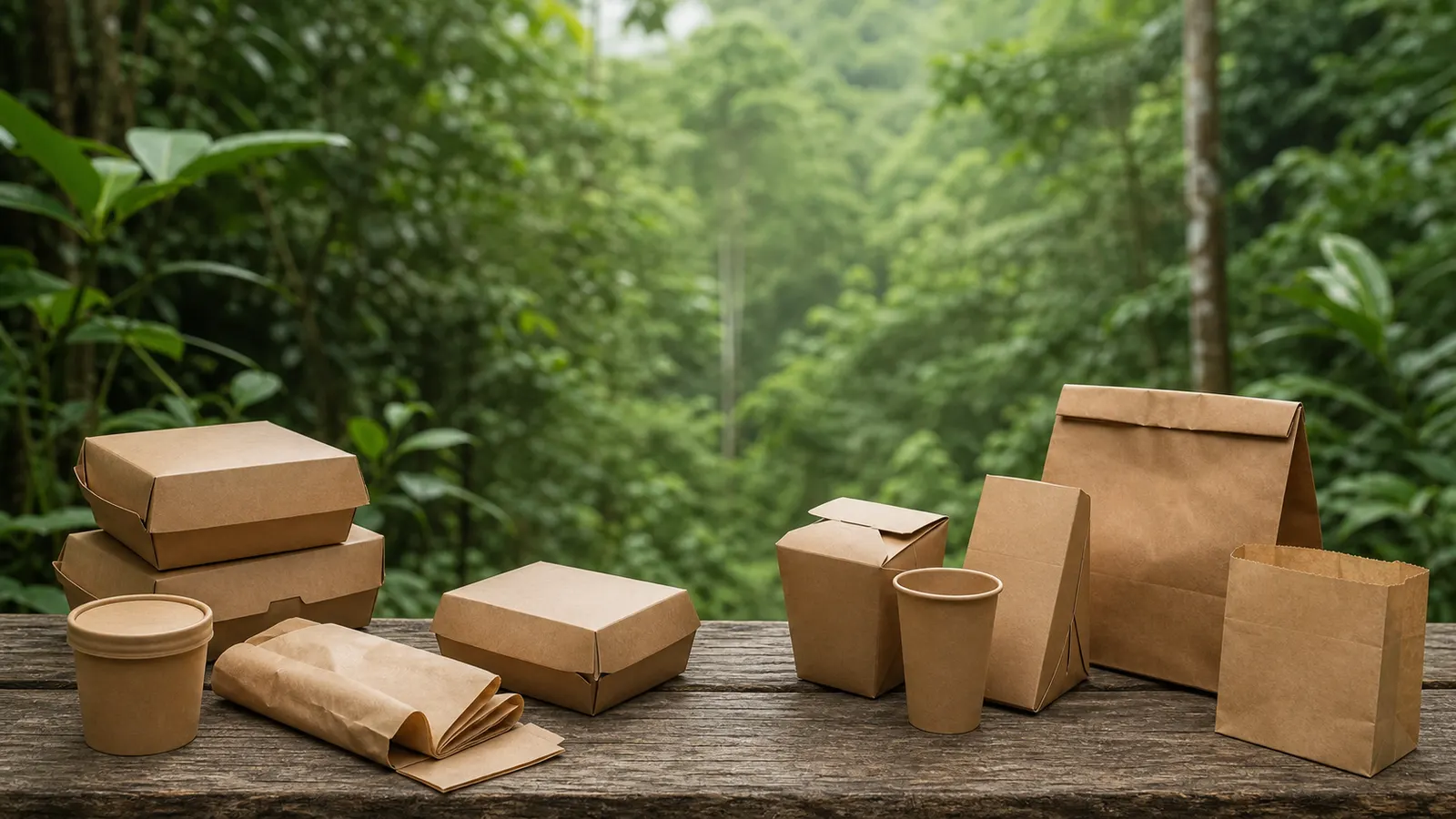
Look beyond the kraft-paper appearance
Kraft food packaging includes boxes, bowls, wraps, sleeves and cups made from paperboard. The visible paper does not reveal the full structure: many packs rely on a coating or liner for oil and moisture resistance.
Match the format to the meal
Boxes may suit burgers, bakery items, fried snacks and sandwiches. Bowls can suit rice or chilled food when the lid and barrier are appropriate. Cups and soup formats need product-specific temperature and leak guidance.
Test steam, seams and lids
Pack the food at service temperature and check folds, glued seams, lid movement, condensation and grease marks after the expected holding time.
Ask what the barrier changes
Confirm the coating or liner material and how food contamination affects the claimed disposal route. A paper appearance alone does not prove recyclability or compostability.